Featured Adventure
Why go heliskiing in spring in Iceland?
Elemental Adventure •
In May we sent EA team member Chris to sample Iceland's world-renowned "corn snow" and learn why spring on the Troll Peninsula offers heliskiing and heliboarding experiences that are just as memorable as deep powder days in mid-winter. Chris shares his experience and seven reasons why you should plan a spring heliskiing trip to Iceland.
Seven Reasons Why You Should Go Spring Heliskiing in Iceland
1.) Reliable snow - winter blizzards in Iceland bring strong wind that creates deep accumulations of snow in sheltered hollows. When spring comes, breezes off the Arctic Ocean and 66° latitude combine to limit solar gain so snow sticks around until June and freeze-thaw cycles are less extreme than in most mountains.
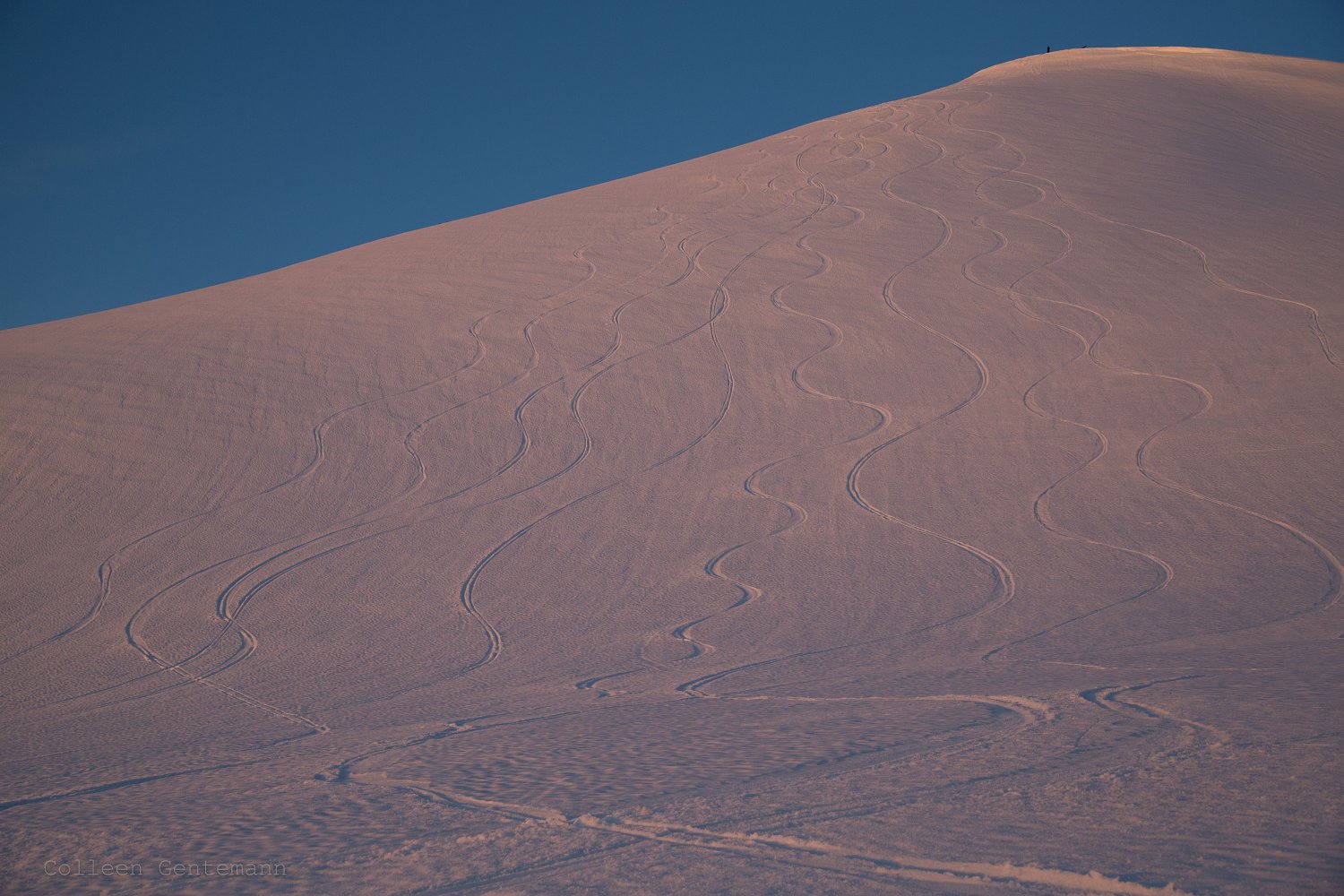
2.) Perfect silky-smooth spring "corn" snow (highly under-rated) makes heli-skiing and heli-boarding accessible for practically all levels of skiers, from the pros right through to the timid intermediate. Apart from being a dream to ski, corn snow is appreciated by strong skiers and snowboarders because the snowpack stability opens up steeper pitches that can be unstable in powder...but is also fantastic for those without deep powder skills (or fitness). Wide open descents and less depth make it easy for anyone who isn't confident making tight turns in deep snow and trees.
3.) Plug and play - heliskiing is simply easier in spring. No bulky layers, heated socks and hand warmers. Forget getting stuck in deep powder or snow sticking to your boots every time you take your skis off.
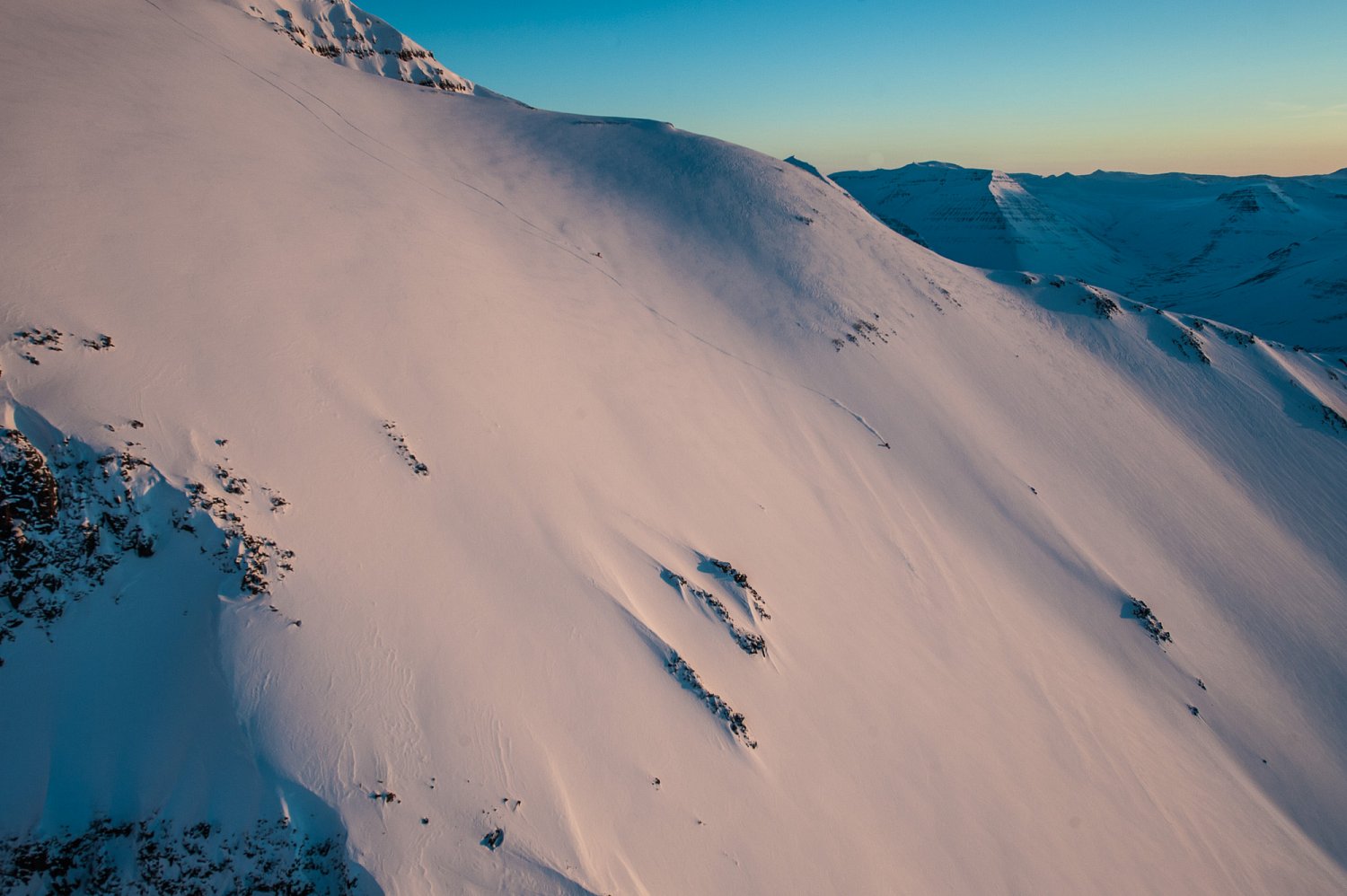
4.) Sensational views and leg burning descents – Iceland in spring is one of the most picturesque places you could visit, let alone heliski. Combine ocean views with some of the longest descents possible for a monumental skiing experience.
5.) Skiing at midnight on mountains bathed in a golden glow is a magical “bucket list” skiing experience, but 24-hour daylight also mitigates the risk of any downtime – if you have a “down day”, catch up by skiing at night!
6.) Better weather – less risk of helicopters being grounded, picnic lunches in the sun and wearing shorts to apres-ski add up to a totally different skiing experience.
7.) Iceland is a destination in itself and easy to reach for anyone travelling from Europe or North America’s East Coast. Combine a 4-day heliski programme with visiting Iceland’s otherworldly landscapes and the buzzing capital city of Reykjavik.
Arrival at the Tröllaskagi Peninsula
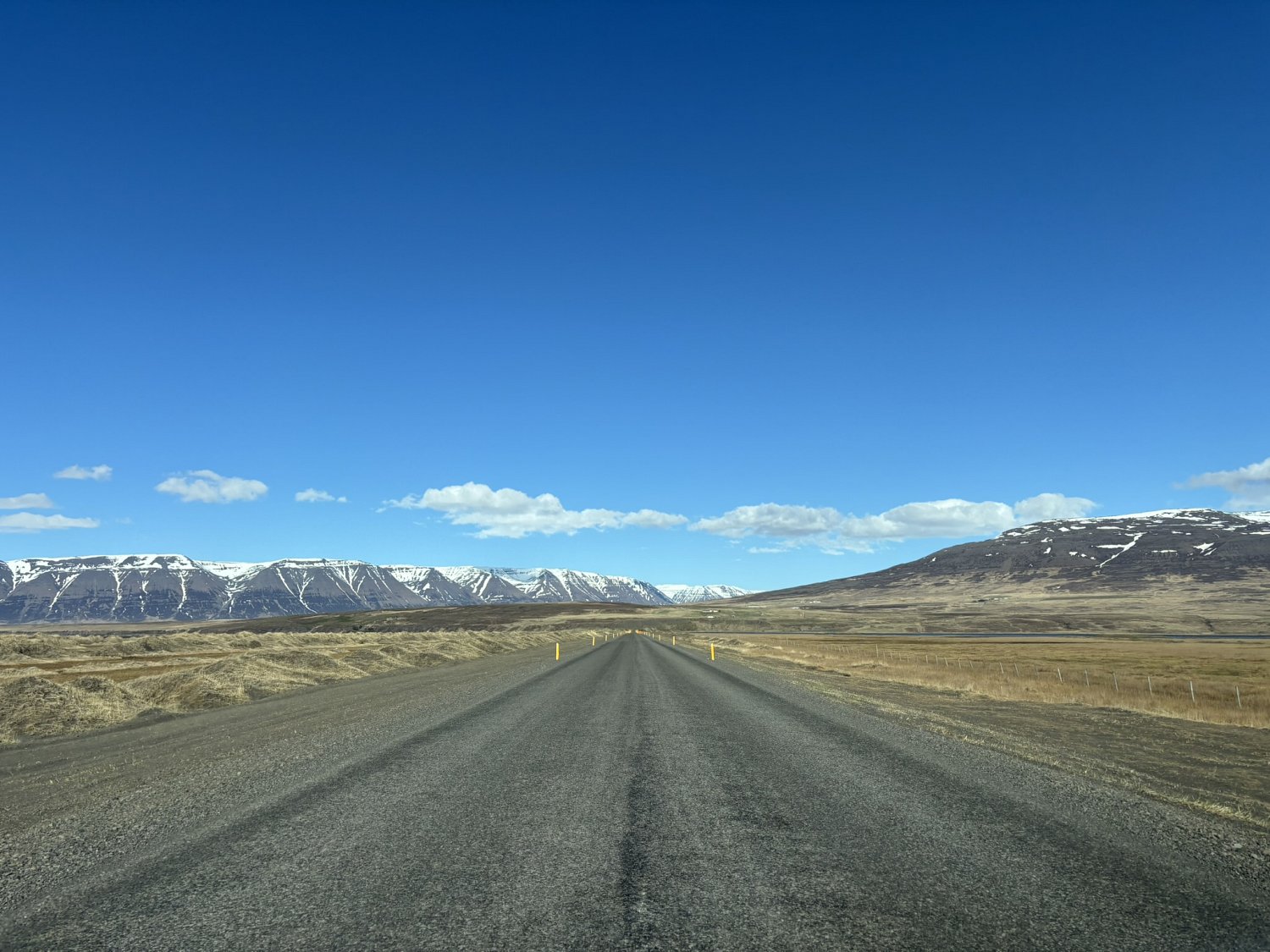
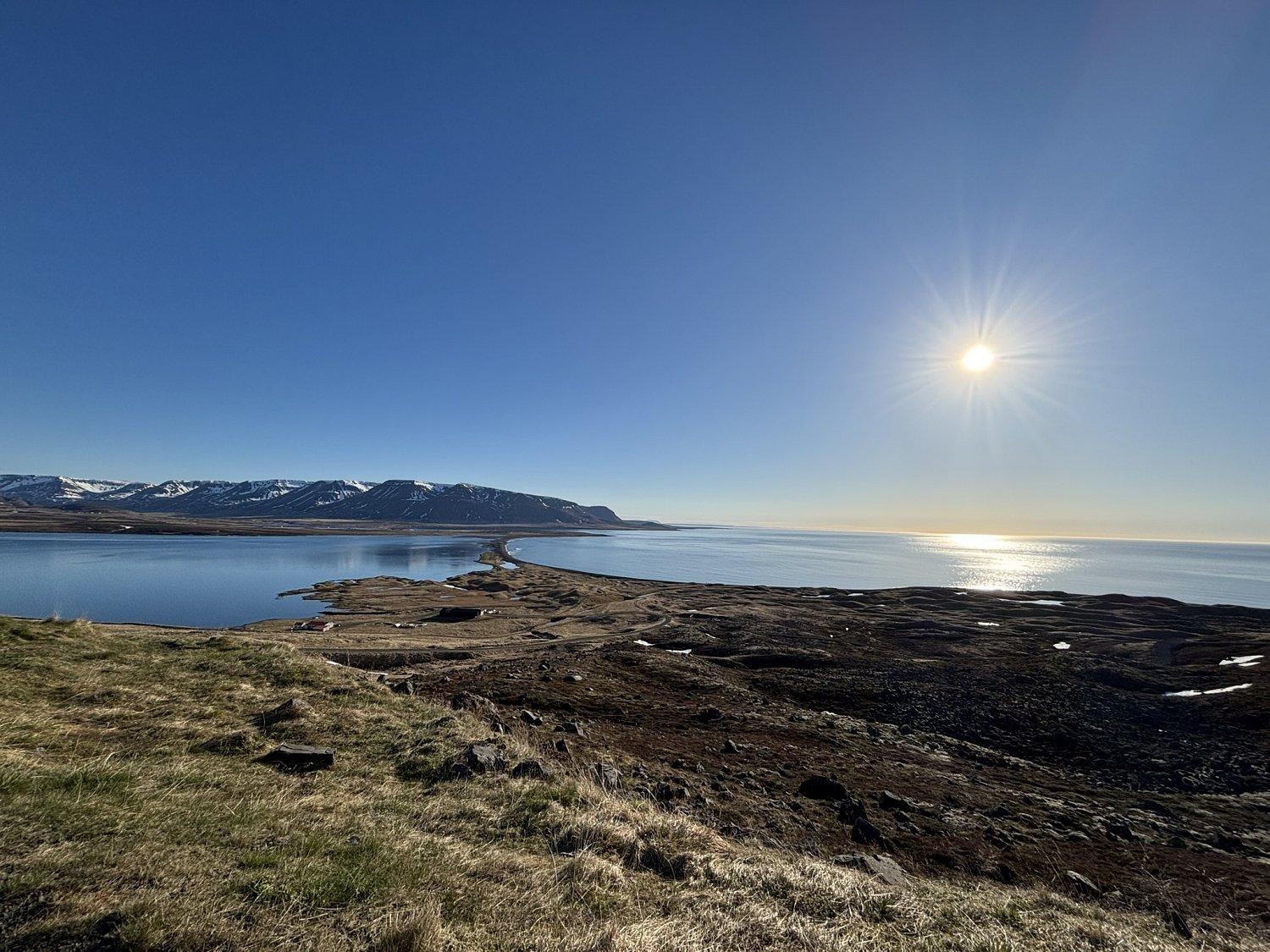
Driving up the valley at 9pm on Sunday evening to Klaengshóll Lodge on a dusty gravel track with the May sun illuminating the surrounding peaks and newborn lambs in the fields, my introduction to Iceland couldn’t have been any more picturesque.
Having driven from Reykjavik along the Northwest Coast with staggeringly beautiful scenery and not passed another car for hours, I was not surprised to find very little sign of life until reaching front door of the main house where I was greeted warmly by Skip, a Tahoe native who has resided at the lodge for many years.
A quick bag drop and orientation was followed by a delicious dinner, washed down with refreshing Icelandic beers. If my arrival in Iceland was anything to go by, I knew I was going to be in for a treat over the next few days.
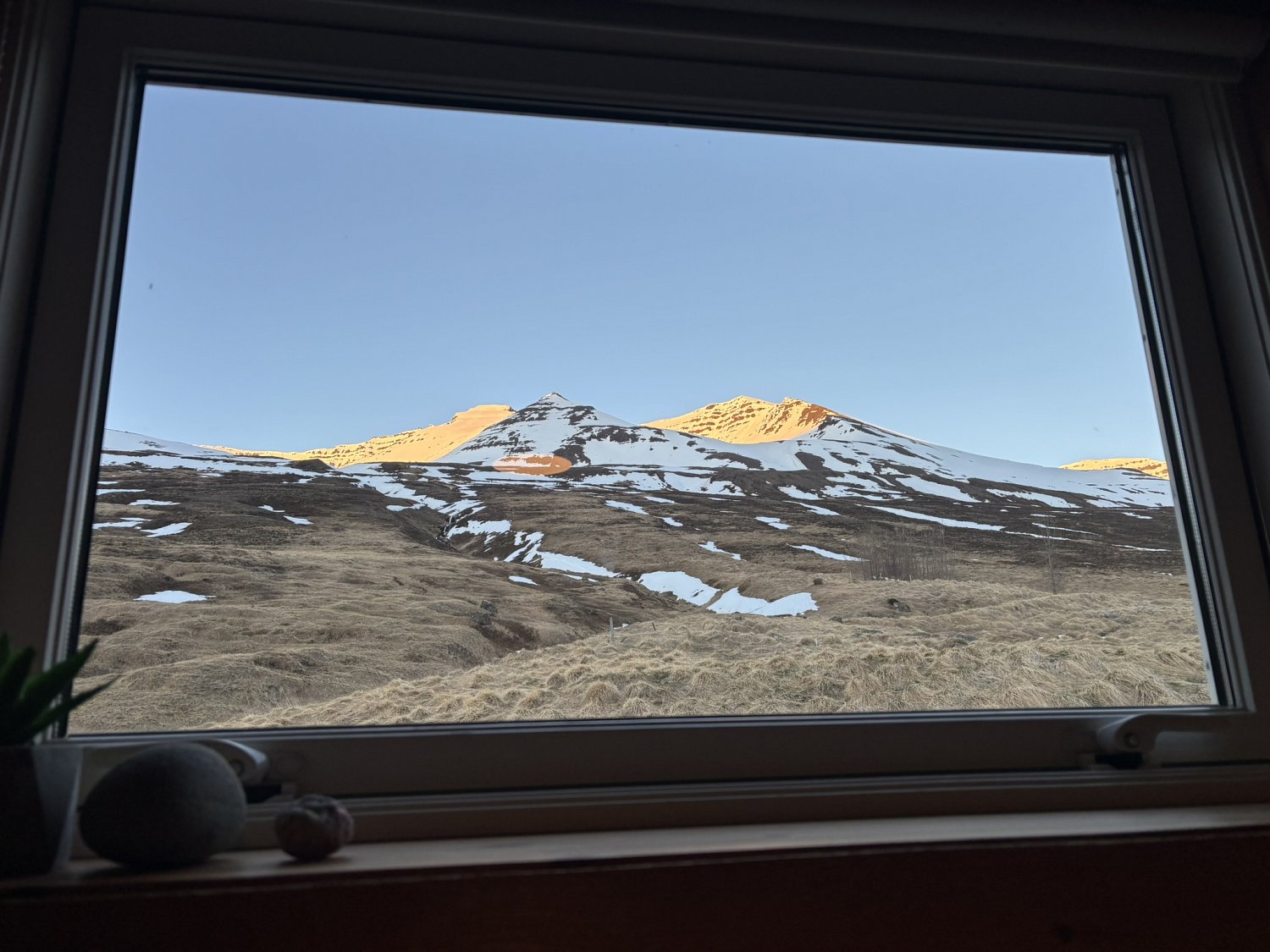
Preparation for Spring Heliskiing
The first notable plus side to heliskiing in the spring, is the weather difference. I strolled down to the main house for breakfast in hoody, shorts and North Face down slippers with Arctic sun warming my back, thinking how much easier it was than suiting up and wading through fresh snow in Canada’.
At this time of the year Klaengshóll is usually fully free of snow. However, it’s not uncommon for the odd late season storm to blow through and send everything back to the depths of winter, but even if it does, all it takes is a few warm days and usual spring service in the valley is resumed. After a hearty breakfast it was time to don ski attire for the day.
Led Zeppelin blasting out of the speakers in the gear room meant the usual pre-heliski energy was as infectious as ever and, grinning from ear to ear, we made our way down to the helicopters. Given the absence of snow at lodge level, this too was remarkably easy – just a short walk across the gravel path and spongy grass before loading up and getting underway.
The simplicity and effectiveness with which we began the day turned out to be the theme of the trip, it really is just plug in and play heliskiing. You don’t have to wear dozens of layers to stay warm, pack extra gloves for when your first pair gets soaked or worry about fogged goggles or snow build up on your boots every time you try and put your skis on.
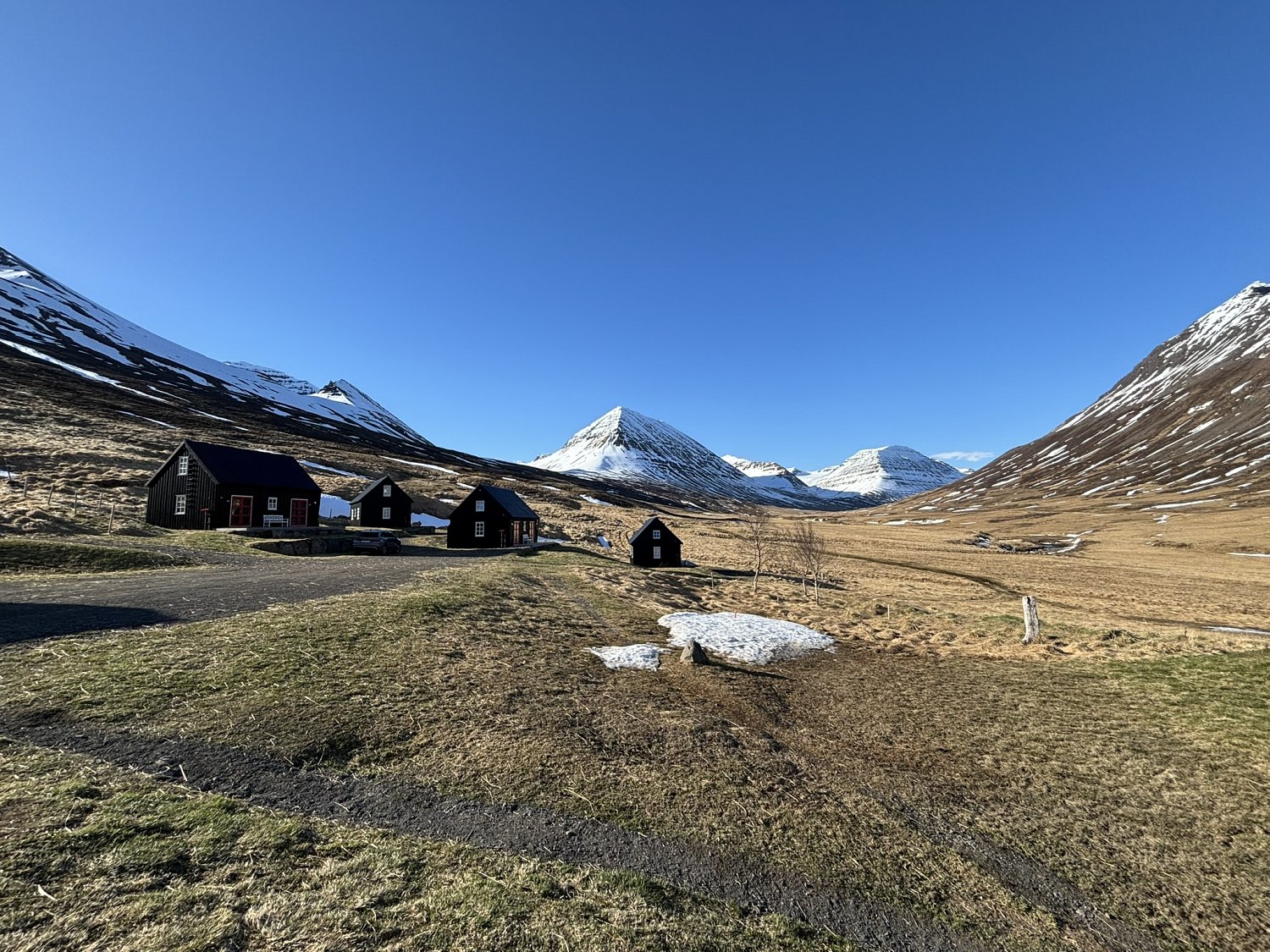
Flying into the Tröllaskagi mountains
Stepping into my bindings at the top of our first run of the day and, having not skied since mid-January, I was a little cautious as I followed the rest of the group off the summit. These guys had been skiing together for the last few days, had their ski legs in and knew exactly what to expect, but after my first few turns and feeling the consistency of the creamy corn snow underfoot, any nerves and apprehension vanished as we carved our way towards the fjord below.
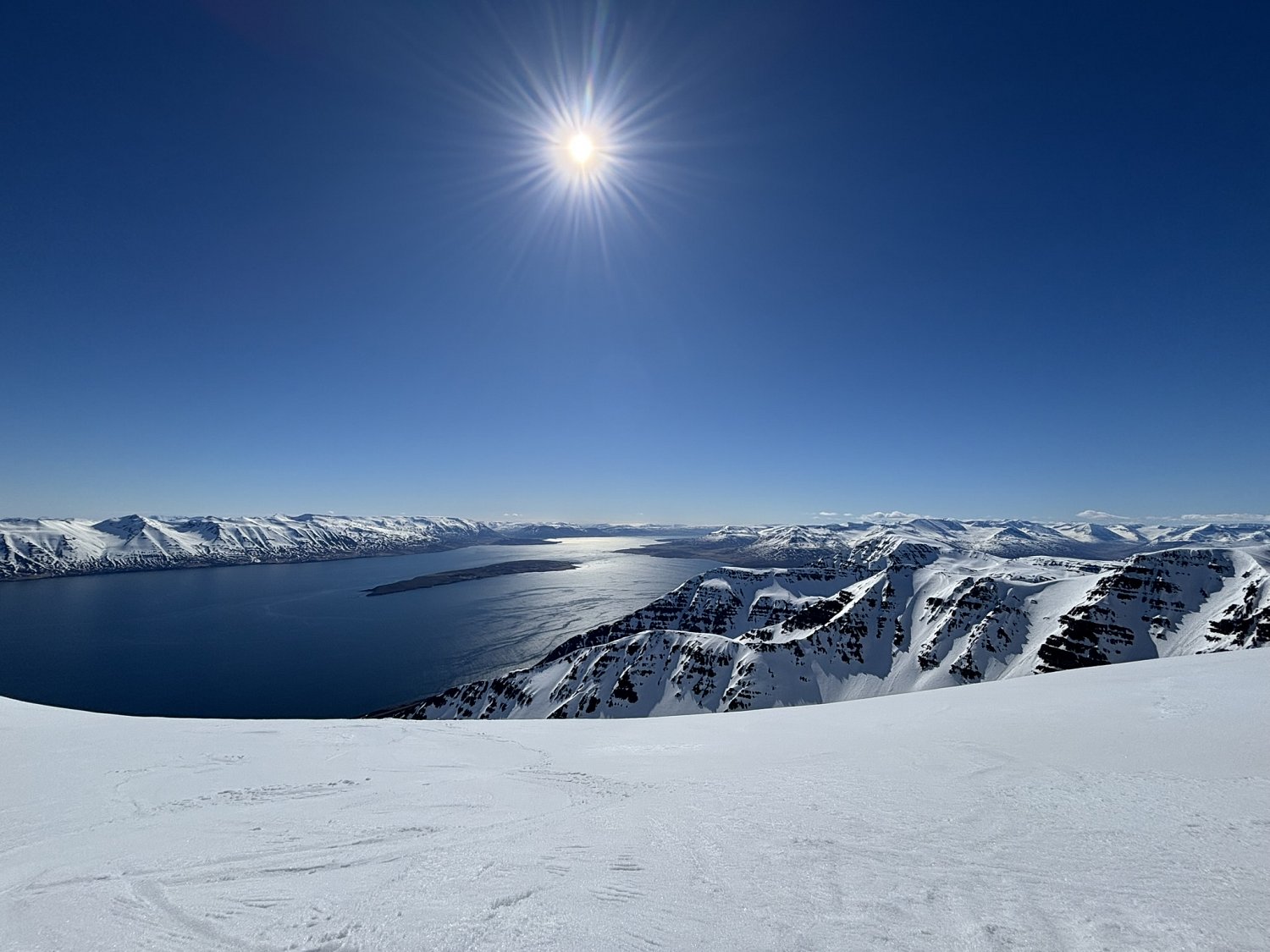
What is “Corn Snow”?
So how does corn snow get its name? During the spring months the snow surface often repeatedly melts during the day and refreezes overnight. Over the course of several cycles of melting and refreezing, the grains of snow become large and round, in many ways resembling kernels of corn. In their 'just melted form', these grains provide one of the greatest skiing sensations imaginable.
Being in the right place at the right time to ski fabulous corn snow is an art known to the best mountain guides who know their terrain intimately and time their arrival at the different exposures to perfection.
In most alpine areas across the world, corn snow has a very short window during which conditions are good enough to enjoy skiing – it often transforms from hard ice to deep slush in the blink of an eye as the sun rises fast and the air temperature jumps.
Iceland's corn snow is widely regarded as being some of the best in the world thanks to the combination of high latitude (meaning low sun), cold wind off the Arctic Ocean and cooler night-time temperatures which together result in freeze-thaw cycles that are not too extreme – just right to keep the corn snow perfect for hours instead of minutes.
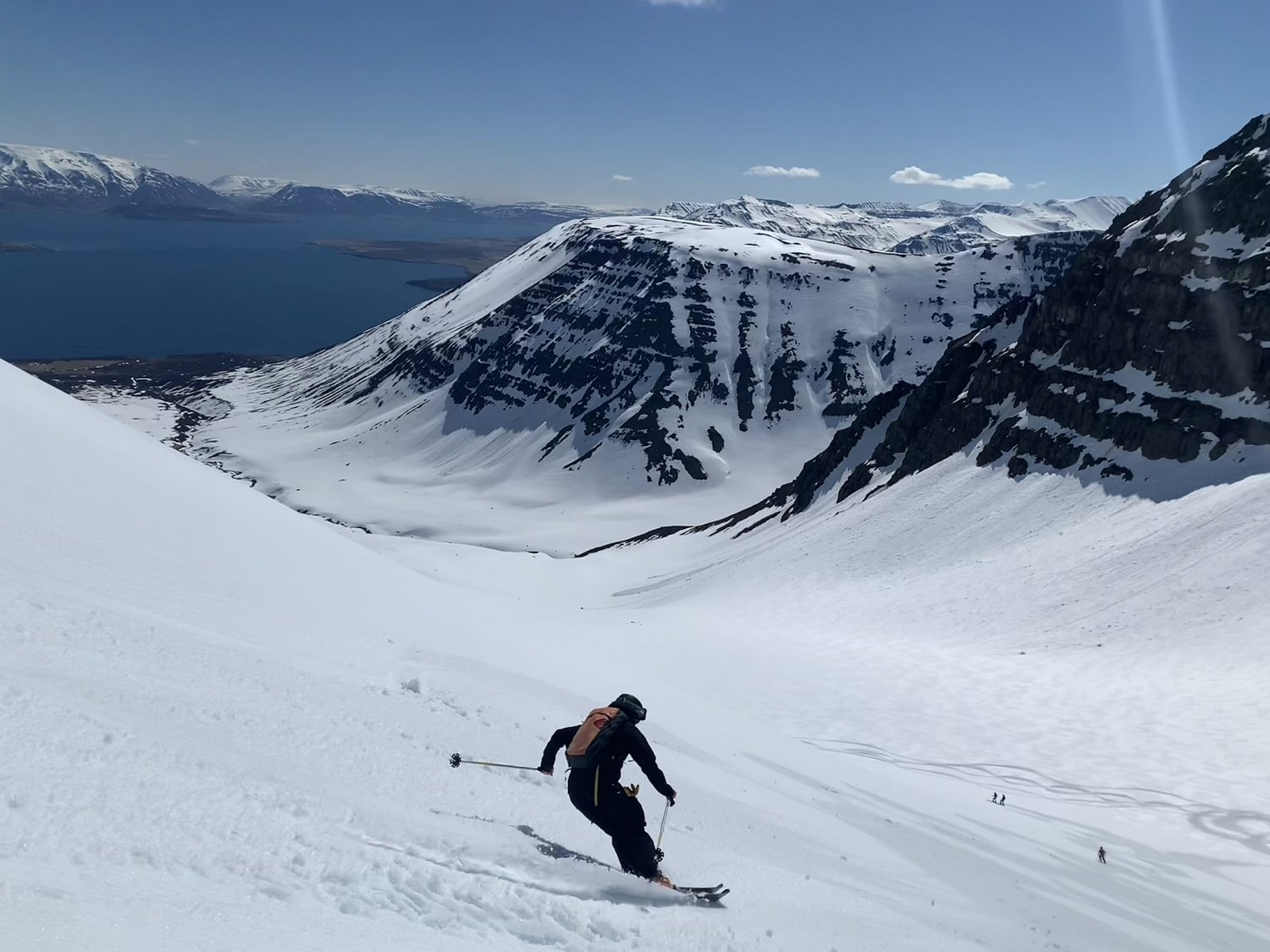
Iceland’s Spring Snow and Heliskiing
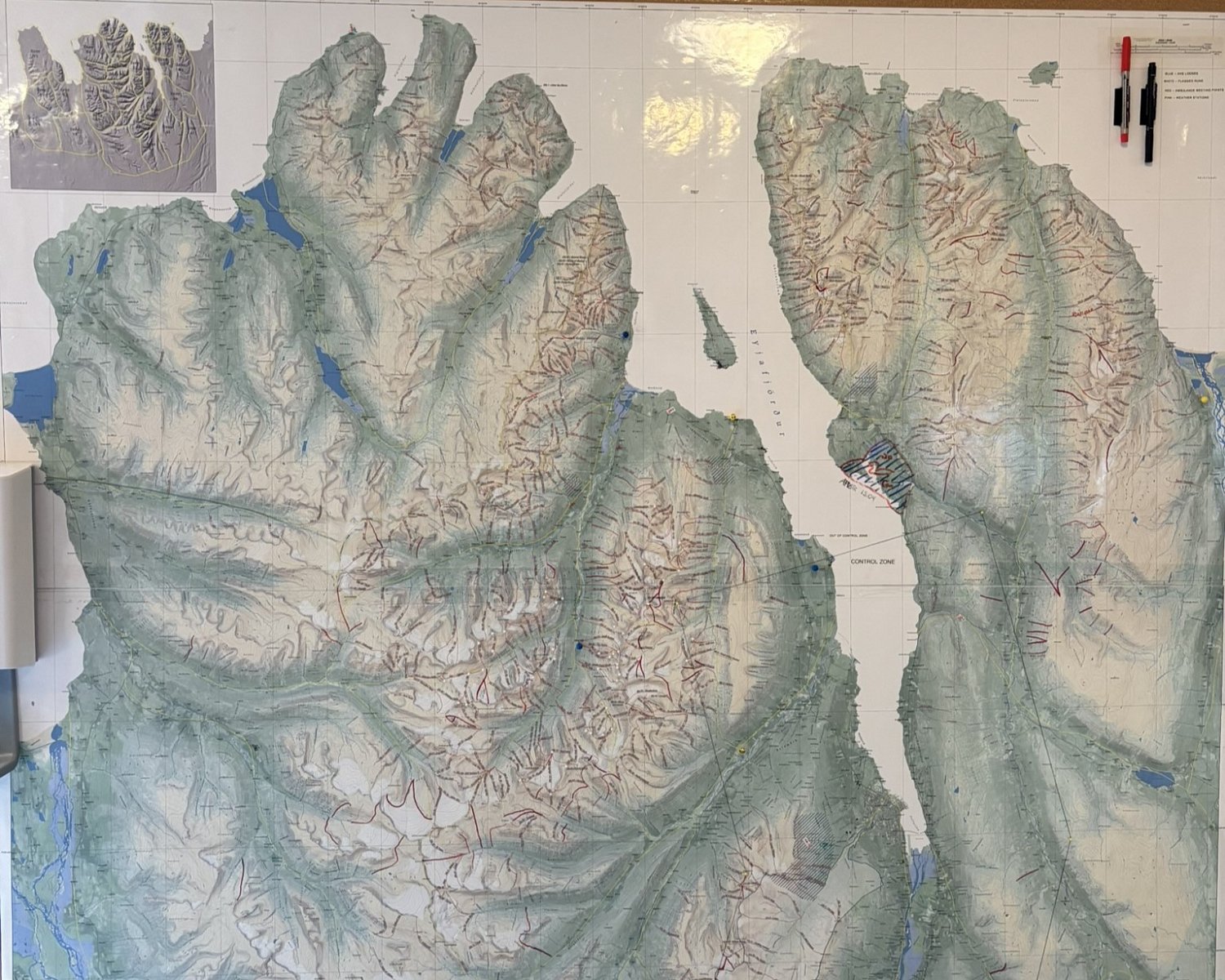
The topography of the area lends itself to skiing a lot of runs in a short period of time without having to fly too far and burn through your Hobbs hours*. The shield volcanos that make Iceland so distinctive create a natural playground with seemingly endless opportunities all just moments apart. On my first morning we completed seven long descents across different faces and valleys, all whilst seemingly never leaving the same zone, such was the speed and efficiency with which we arrived back at each summit.
The group I was skiing with were all experienced heli-skiers, but this reinforced a key point about heliskiing generally - having a fast group of similar ability really does provide a much slicker experience and ultimately leads to getting more runs under your belt.
*Hobbs hours are a measurement that tracks the time during which the helicopter's engine is running at full power as opposed to idling - and most heliski packages include a certain amount of flying time.
Lunch on the Shore of Eyjafjörður
By 1pm and after seven leg burning descents, we were whisked away to the terrace of Karlsa Lodge, a coastal property primarily used for ski touring programmes but offering a stunning view across the fjord to the Gold Coast. Lunch was a welcome opportunity to take a seat, refuel with an array of home prepared soup, sandwiches and addictive local chocolates. It also offered a brief rest for my legs and a chance to reapply suncream in preparation for the afternoon session.
Refuelled and rehydrated, we waited for the first group to cross the fjord before the helicopter returned to collect us. Our guide, Gregory, explained how having access to such a large area allows the guides to follow the sun and ski different aspects through the day, arriving in each place when the snow has softened to perfection.
Heliskiing on Iceland’s Gold Coast
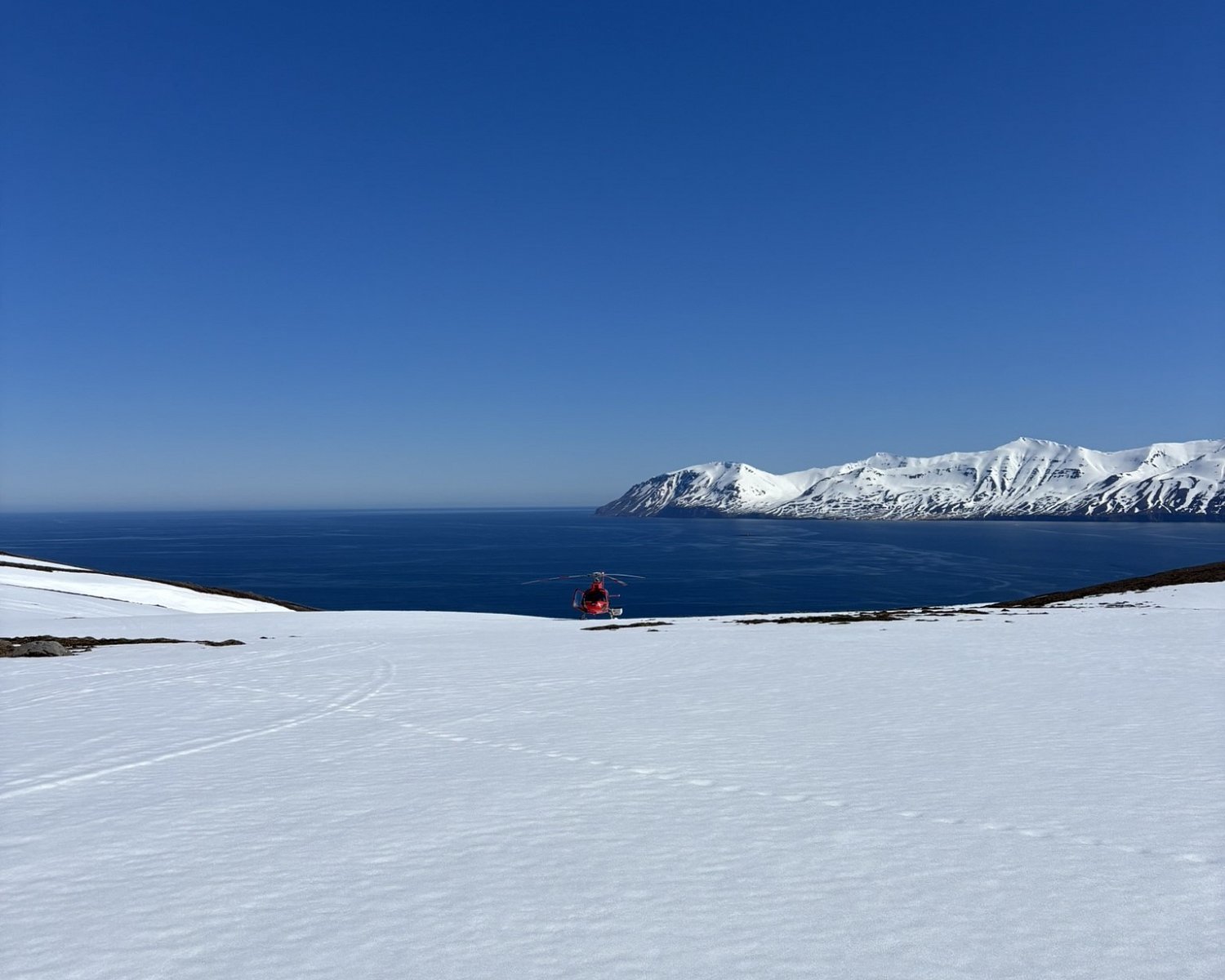
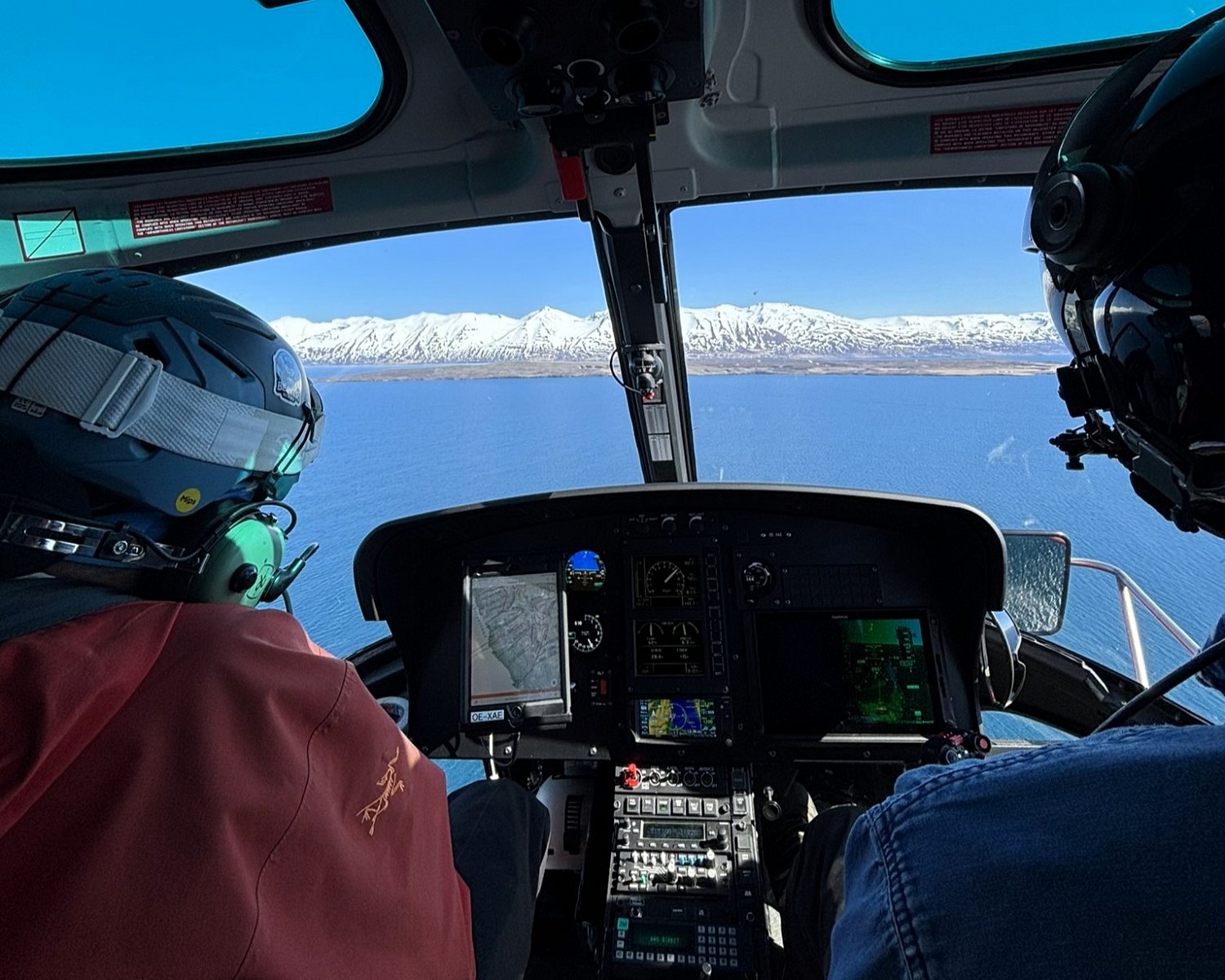
The flight across the fjord was spectacular. An endless view of the Arctic Ocean to our left, Akureyri at the head of the fjord to our right, with the towering walls of the Gold Coast ahead, rising dramatically from the dark waters of the fjord.
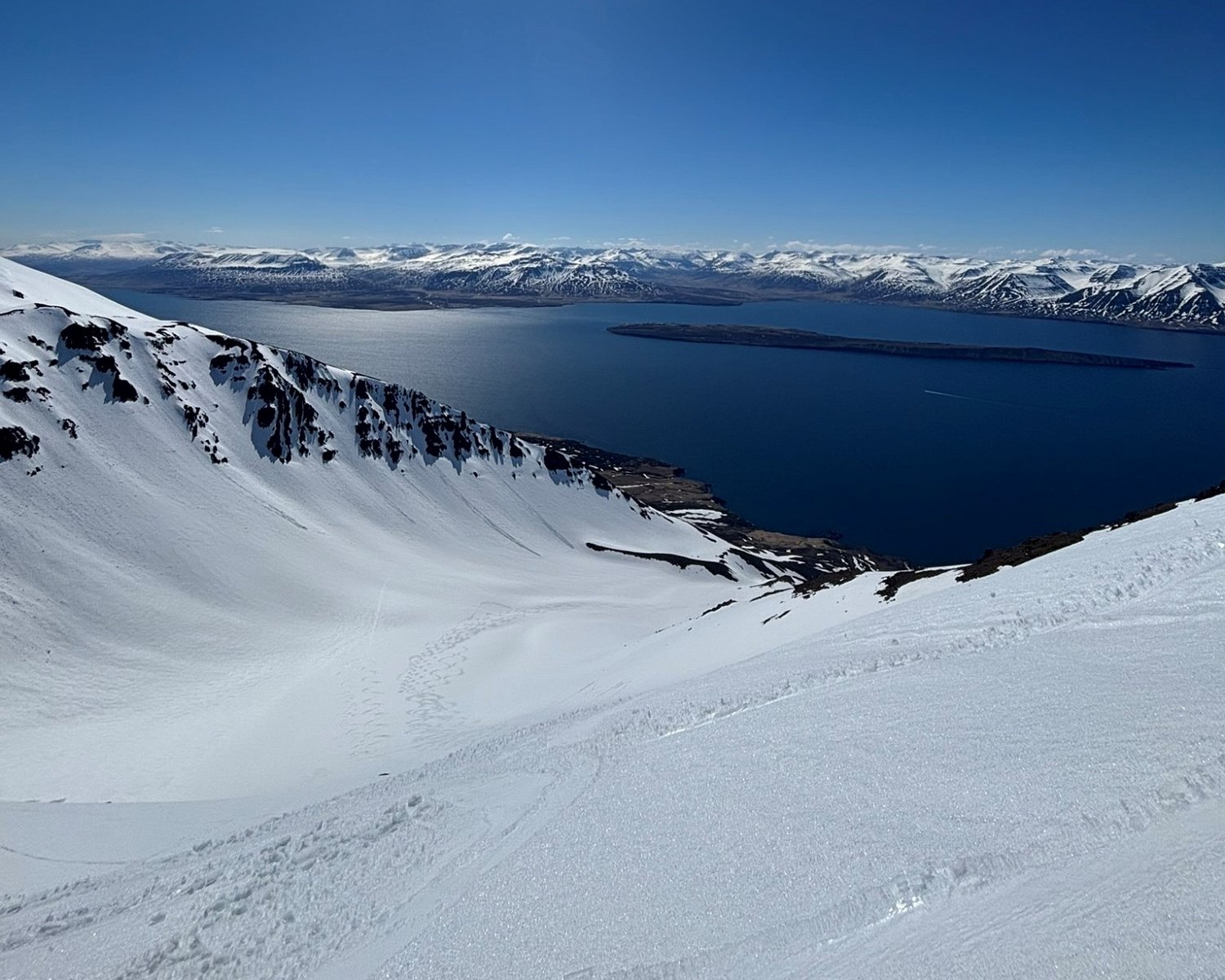
Our pilot, Armas, expertly dropped us off on a narrow ridge, and after a quick discussion about the line, we dropped into another buttery smooth face - easily the longest heliskiing run of my life, and possibly the most enjoyable. The steep section at the top held your attention and posed a nice challenge, then, as we followed the natural curve of the valley around to the right with a series of long sweeping turns, we were greeted with an expansive view back across the fjord to Dalvik.
It was one of those moments where everything comes together and you become something of a passenger in your own mind - a moment that will be forever etched in my memory.
The rest of the afternoon continued in the same vein. The descents stacked up, each one as good as the last, until eventually the last run was called. With the skis bundled up ready for collection, there seemed to be a collective moment of reflection amongst the group as to just how lucky we were.
I was surprised to find out that we had only completed 5 runs post-lunch, such was the time we seemed to have spent actually skiing. The contributing factor to this was the run length and, as we waited for the helicopter to collect us, Gregory explained that at this time of the year you can usually link together all of the various sections of runs due to the stability of the spring snowpack, from the steep faces at the beginning all the way to the couloirs leading to the shore line, only stopping when you run out of snow at the end.
Icelandic Après-Ski
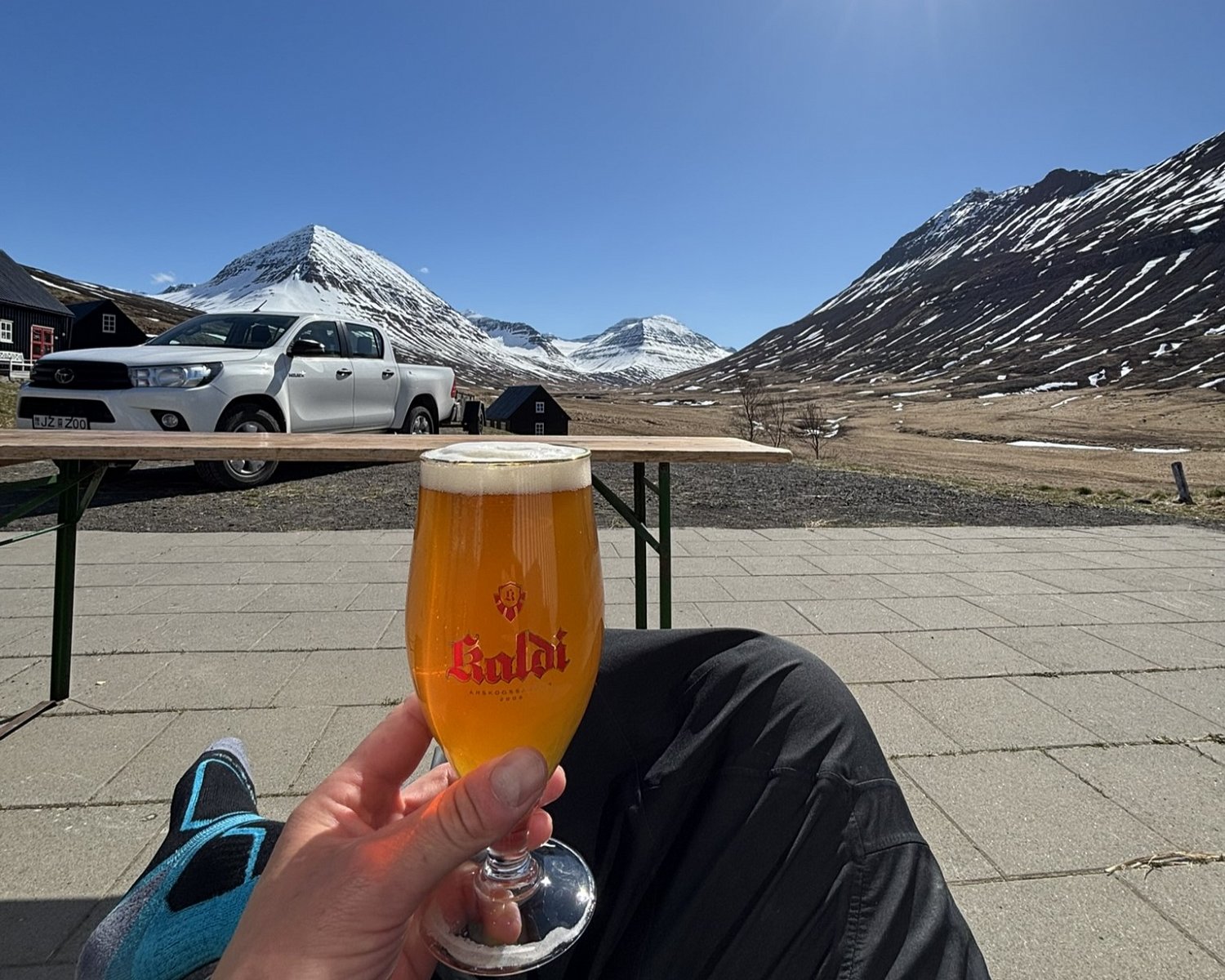
During the short flight over the fjord we searched for whales and could see our tracks from the morning which, by now, seemed like a whole different day. Back at the lodge, the Swedes had commandeered the après-ski boom box and were starting their second beer with AC/DC’s ‘Back in Black’ ringing out across the lodge. We discarded kit and, beers in hand, headed out to join them on the outdoor sofas in the late afternoon sun while others headed with their beers to the outdoor hot tub.
As a pre-dinner ‘treat’ we were invited to sample a local delicacy of fermented Greenland shark washed down with a glass Brennivin. Treat is a questionable term, but when in Rome…
Dinner itself was more appetising – Lobster bisque followed by Chateaubriand, roasted root vegetables and buttered mashed potatoes. The guides announced that there were some low clouds expected the following afternoon. The plan would be to heliski for as long as possible in the morning, relaxing in the afternoon at the lodge with massages and laps between the sauna and ice bath, and for those who were really keen, some heli-assisted touring. Early dinner would be served and then, if the conditions improved, we would head out for some evening heliskiing.
Multi-day Heliskiing in Iceland
Subsequent days proved to be variations on the first, painting turns all through the glacial valleys. Some days, the cloud put an end to things for the day after lunch, while on others, a slow start gathered pace as the cloud burnt off and we took to the skies after lunch and skied until the sun (didn’t) set.
Standard programmes are for four or six days’ heliskiing and these tend to be about right for anyone, allowing enough time in case of some bad weather.
Extending your heliskiing trip to Iceland
After some of the most memorable days’ skiing of my life, my stay at Klaengshóll Lodge came to an end. Despite heliskiing being the major draw, spring in Iceland is also the perfect opportunity to explore the island and discover many of its other incredible natural wonders. Stop by the Godafoss falls to witness the power of nature and then treat yourself to a beer in the thermal baths at the Forest Lagoon on the drive back. If wildlife spotting is your thing, then Eyjafjörður also offers whale watching boat trips where you might spot Humpback Whales, Minke Whales and even Blue Whales.
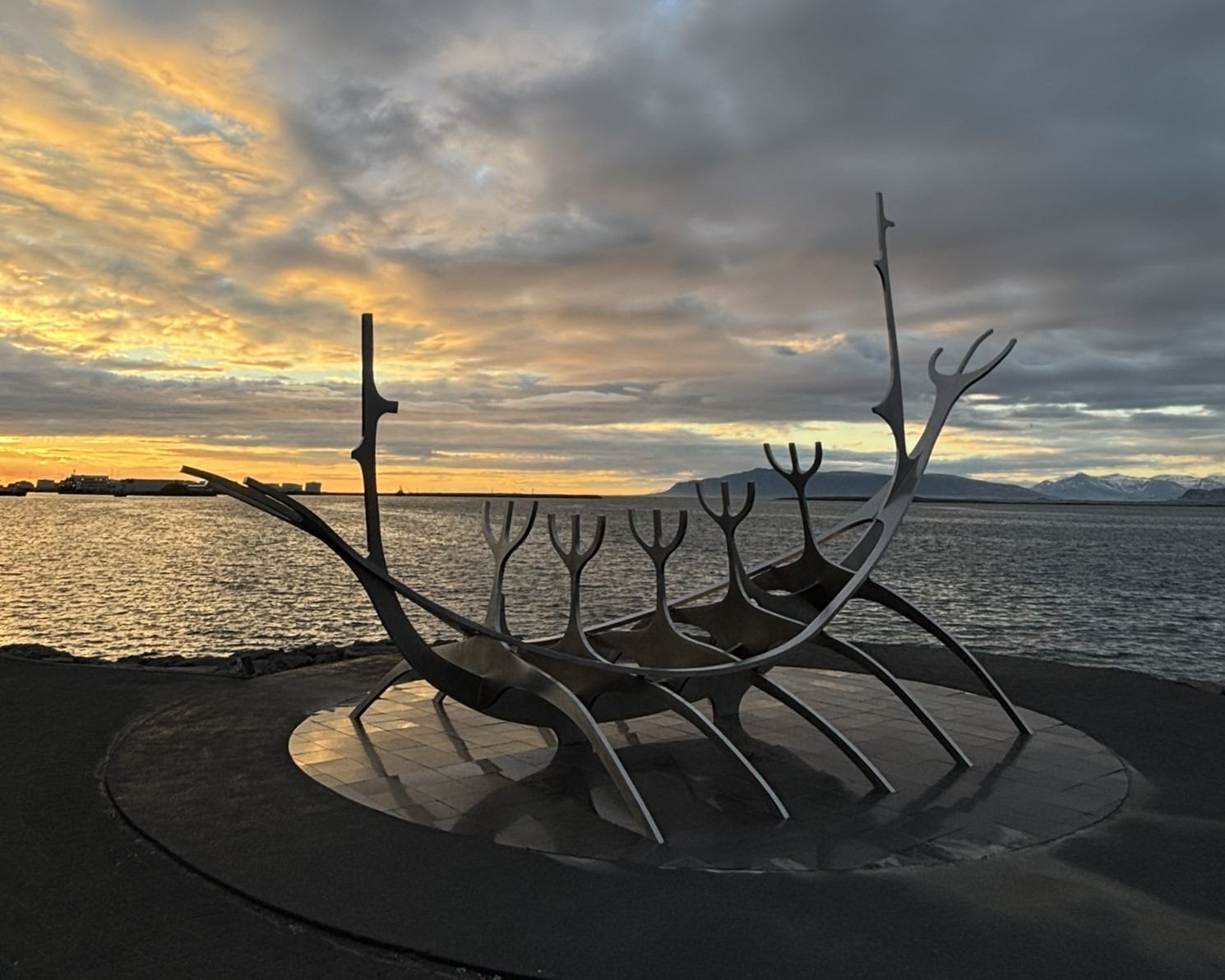
Reykjavik is a great place for a short city break with vibrant bars, plenty of culture and hot springs to soothe sore ski legs. Even after spending 4 days in a helicopter, the FlyOver Iceland experience is a spectacular way see the bits of Iceland you didn’t fit into your trip.
I’d also highly recommend dinner in Kol, a fabulous restaurant that blends local produce such as reindeer, salmon and Arctic char with ideas from the rest of the world. Anyone who still has the energy should be sure to make a quick stop at the Hús máls og menningar for some live music and sing along followed by a nightcap at Dillon Whiskey Bar.
How long to go heliskiing in Iceland for?
Allow for at least one extra night in Reykjavik on top of four or six days’ heliskiing so we suggest allowing 5-10 nights in total depending on how long you want to spend exploring the country before or after your heliskiing.
By May, Iceland’s resort skiing is usually coming to an end, but given the timing, most heli-skiers will have had enough days on the mountain in January to April not to feel the need for warm-up resort days.
Planning a trip to Iceland
Getting to Iceland is easy with regular direct flights from many major cities - London, New York City, Seattle, Chicago, Boston, Paris, Amsterdam, Berlin, Munich, Geneva, Zurich, Madrid, Rome, Oslo and more. The abundant connections also make it viable to do as a trip in itself or, for those coming across the Atlantic, to combine with skiing in the Alps.
There are two airports in Reykjavik – Keflavik (international) and Reykjavik Domestic. Reykjavik Domestic is close to the city centre and an easy 45-minute transfer by taxi or shuttle bus from Keflavik. This makes a stopover in Reykjavik a logical and popular option.
Travelling to the Troll Peninsula is easiest by domestic flight to Akureyri (regular and just over an hour) before a 1-hour road transfer to Klaengshóll Lodge.
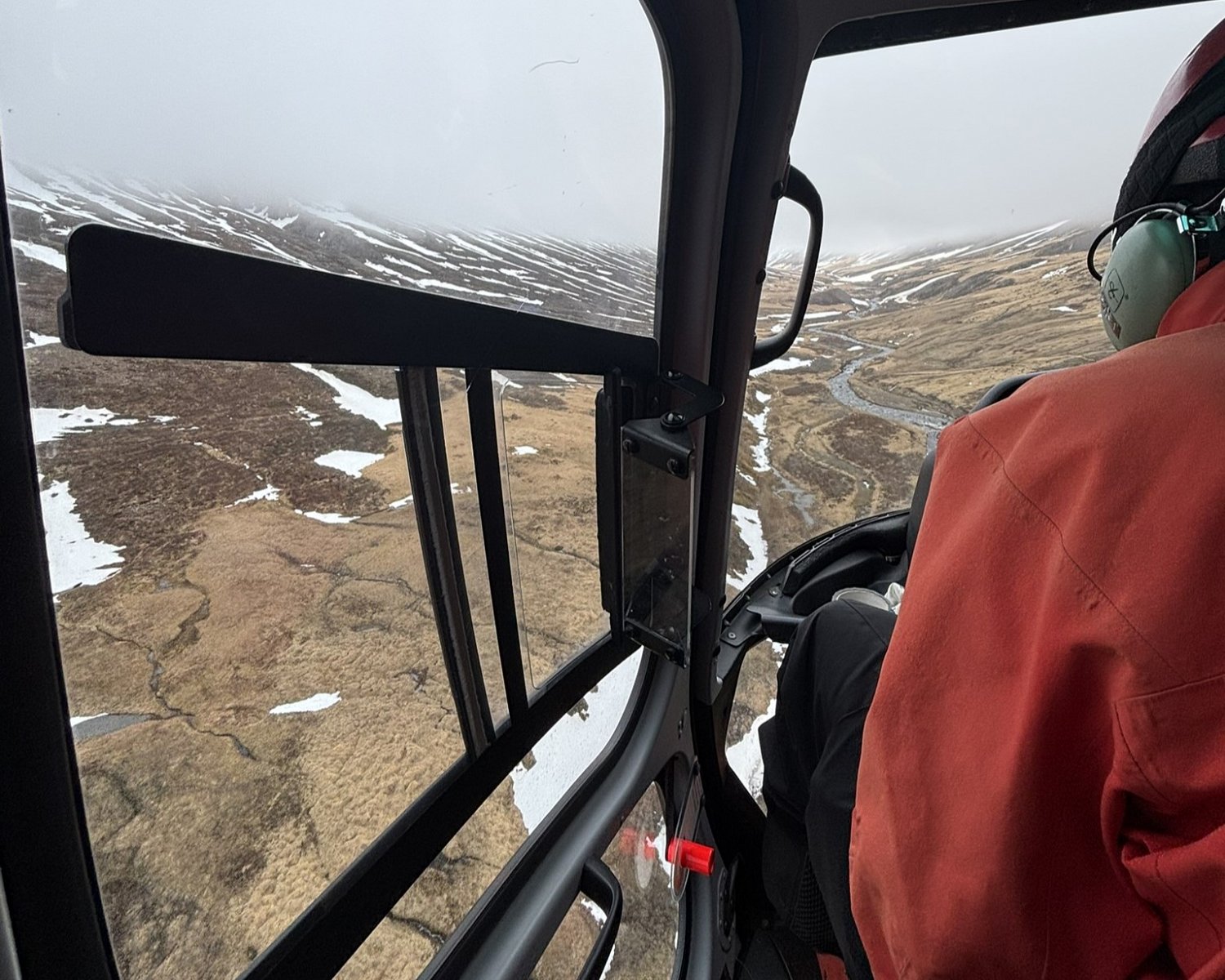
Driving in Iceland in spring is generally easy with 24-hour daylight, light traffic and good roads, though weather can intervene, even in May. The drive from Reykjavik to the Troll Peninsula is spectacular but a bit more of an undertaking, taking around 5 ½ hours. It can make sense to rent a car in Reykjavik to explore locally before or after flying north.
Most trips will require an extra night at the end as you will heliski on your final day and not arrive back in Reykjavik in time for the last international departures.